Aller au contenu
Au Fil de Soi
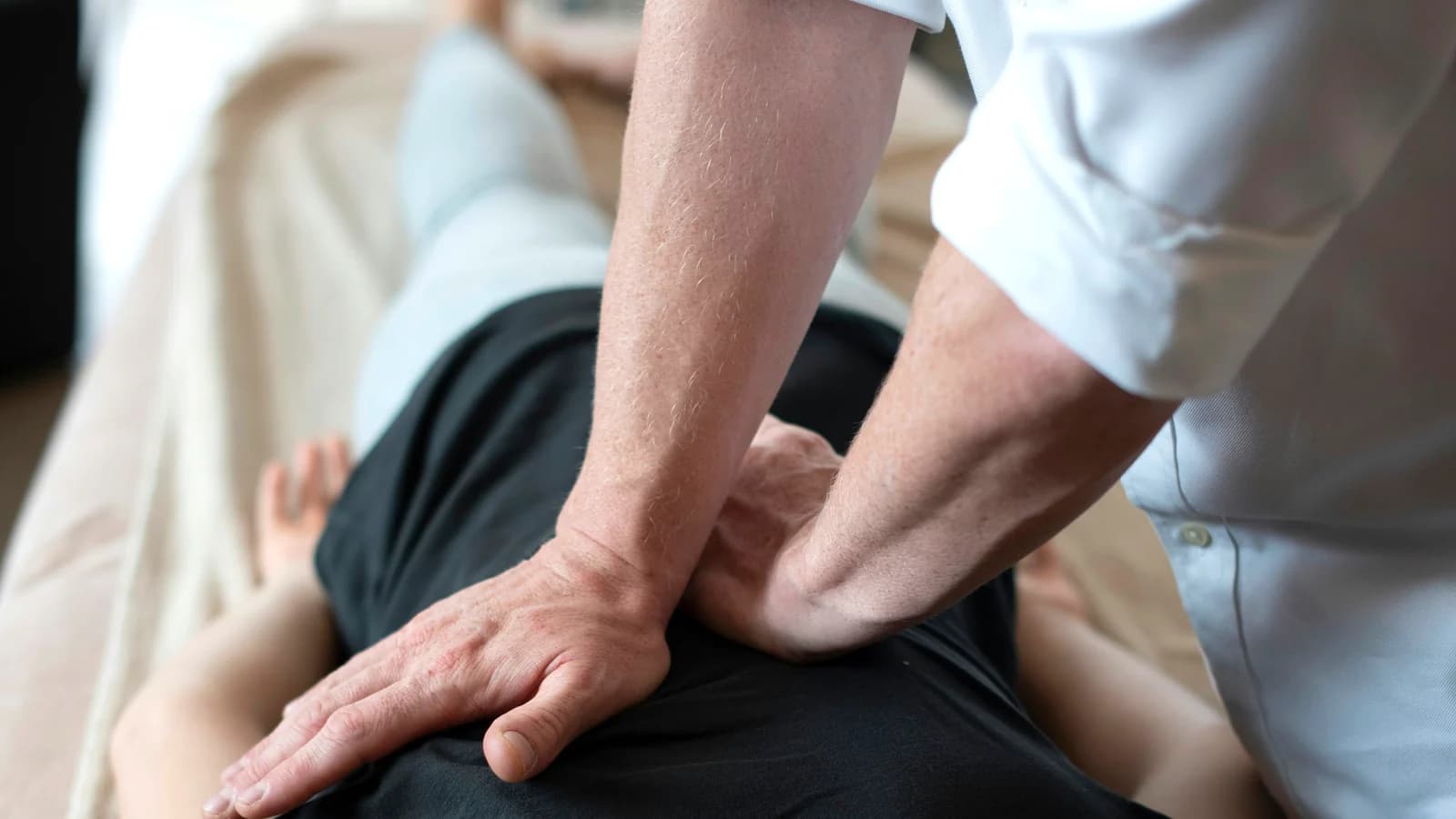
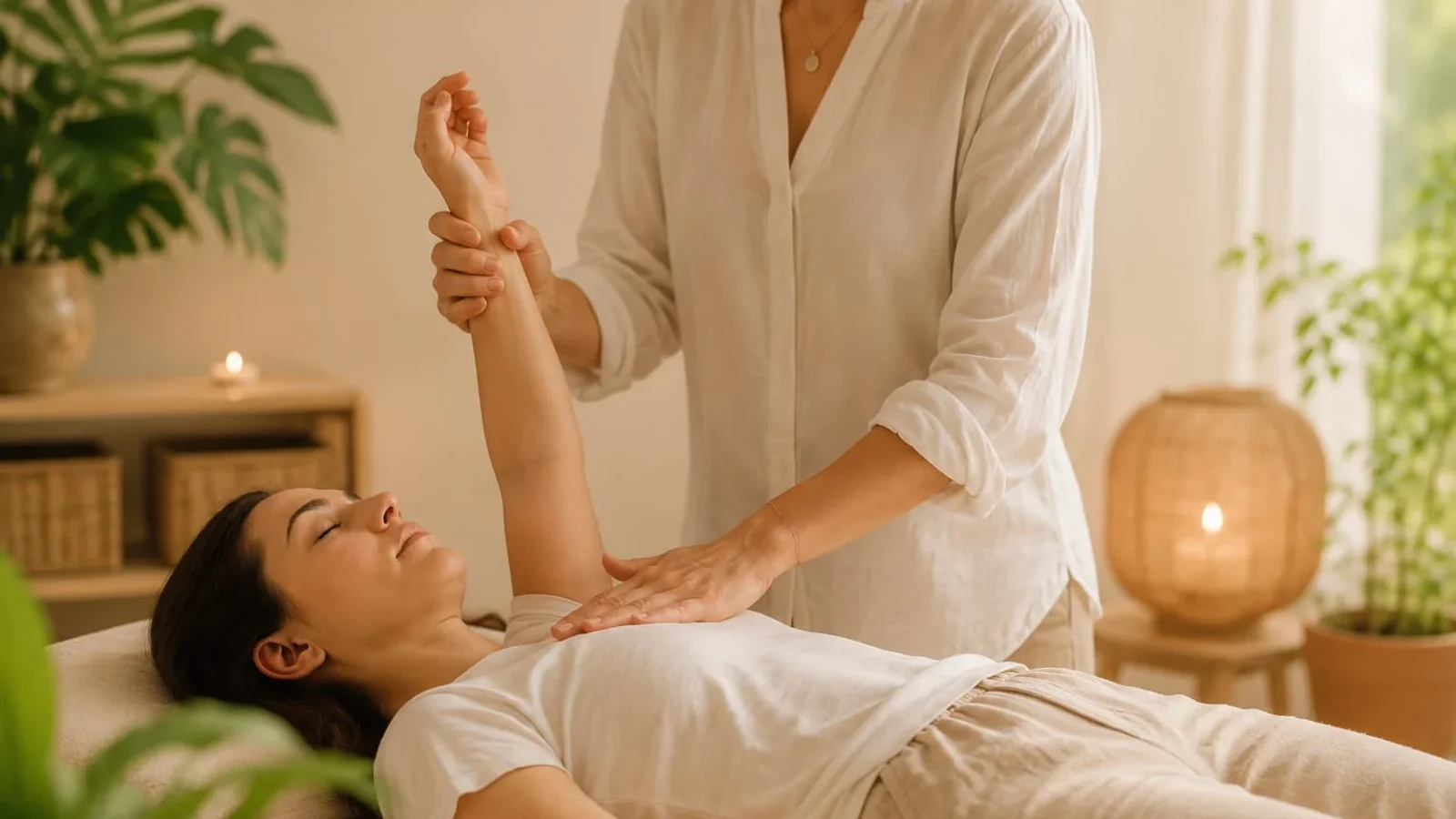
A practitioner in a pale shirt supporting the raised arm of a clothed person lying down — the muscle test
Français
A session

Kinesiology

A method that asks the body a question through gentle muscle testing, to bring out what the mind cannot yet put into words.

What is kinesiology?

Kinesiology is a wellbeing practice that uses gentle muscle testing — light pressure on the arm — as a way of listening to the body. It looks for a general sense of ease and for tension to let go. It is not a healthcare profession: it makes no diagnosis, it is not a treatment for any illness, and it never replaces medical follow-up.

What if your body already knew the answer? A method that asks the body a question through gentle muscle testing, to bring out what the mind cannot yet put into words.

The frame, in two columns

What it is, and what it is not

What it is

  • A wellbeing practice, which appeared in the United States in the 1960s.
  • Painless muscle testing: two fingers, light pressure on the forearm.
  • An hour during which you stay dressed, fully aware, and in charge of everything.
  • I am trained and certified by SYNAPKIN.

What it is not

  • A healthcare profession: there is no state diploma in kinesiology in France.
  • A substitute for medical follow-up, which remains your only reference on matters of health.
  • A promise of immediate results: that will also depend on your own ability to accept situations and to move forward.
  • A service covered by the French national health insurance.
Who it’s for

Is this for me?

These are the sentences I hear most often on the phone. If one of them could be yours, you are in the right place — and if none of them is, that is not a reason to rule yourself out.

  • “I am on edge all the time and I cannot come back down”

  • “I sleep badly, or I wake up as tired as when I went to bed”

  • “I keep repeating the same patterns and I do not understand why”

  • “I am going through a turning point: a bereavement, a separation, a career change”

  • “I lack confidence and I hold myself back”

  • “My child has fears, struggles to separate, or is finding school hard”

A session

How a session goes, step by step

Allow 1 hour to 1 hour 15 in your diary. Timings here are approximate: if needed, we take the time to welcome whatever needs to be welcomed.

  1. 15 min

    We talk, before anything begins

    You tell me what brings you here, at your own pace. No questioning, no judgement. This first step sets the frame and the aim of the session — and we put it into words together.

  2. 30 min

    We ask the body

    You stay dressed, lying down. Muscle testing is very light pressure on the arm. It is painless, and you stay fully aware and in charge of everything that happens.

  3. 15 min

    We bring things back into balance

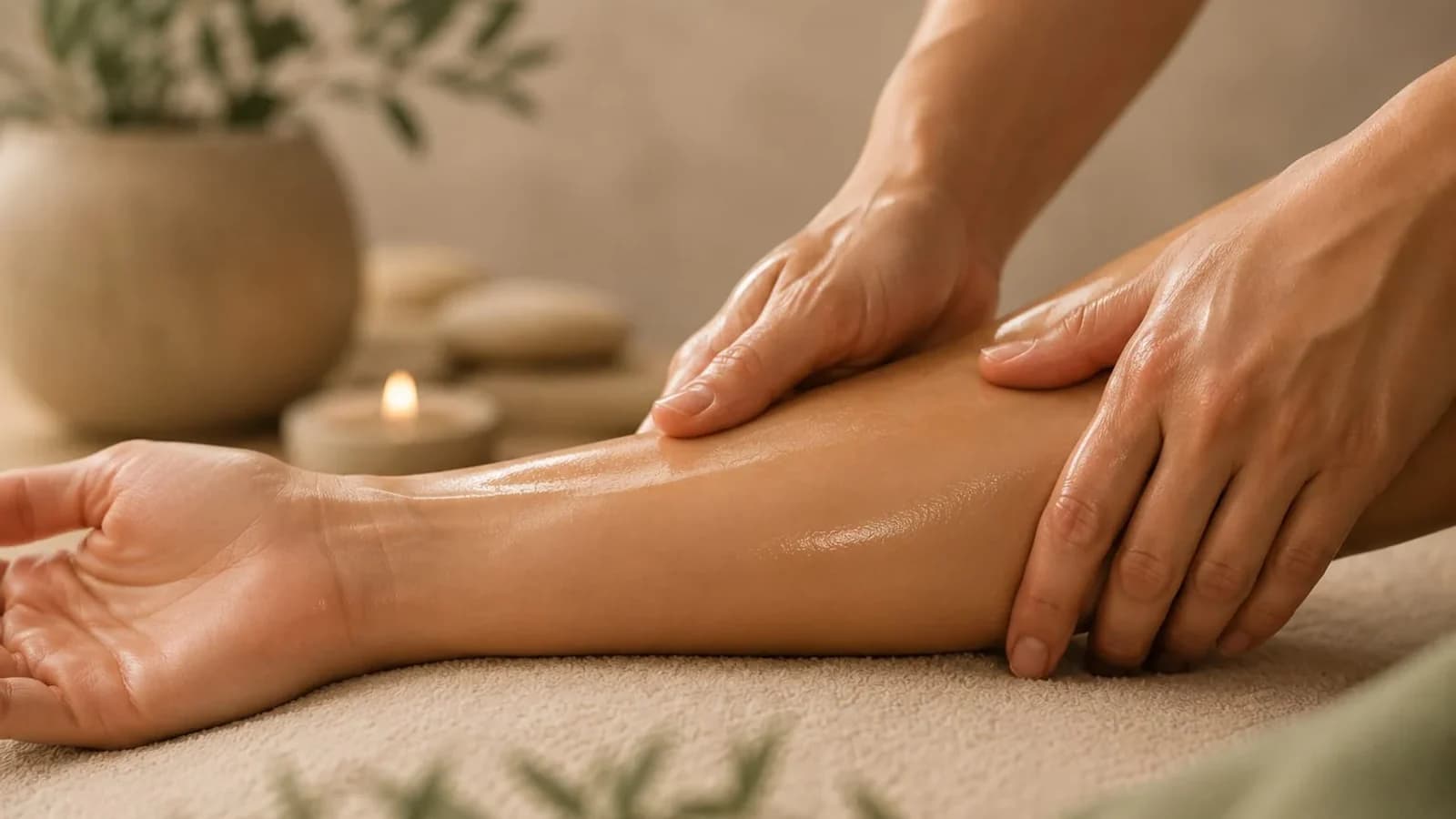
    Depending on what comes up, I use gentle techniques: acupressure points, movement, breathing, work on primitive reflexes. Nothing is abrupt, nothing is imposed.

  4. 10 min

    We anchor it

    You leave with one or two concrete keys to practise at home. That is what makes the work hold over time, long after the door has closed behind you.

The areas of application

This list is translated word for word from what I wrote myself. It describes the areas I work in — not results I promise.

  • Where kinesiology comes from

    • Born in the United States in the 1960s, it is a bridge between East and West
    • On one side, Western chiropractic and its scientific grounding
    • On the other, traditional Chinese medicine, with its meridians and its energetic approach
    • It is the art of listening to the body through muscle testing: no guesswork, no judgement, only the truth of the body in that moment
  • On the psycho-emotional level

    • Stress, anxiety, fears, phobias
    • Limiting beliefs, doubts
    • Sadness, low spirits, unease, depression
    • Addictions
    • Building self-confidence
    • The quality of sleep, and nightmares
  • On the physical and energetic level

    • Back pain
    • Headaches and migraines
    • Physical tension and various kinds of pain
    • Digestive troubles
    • Bedwetting
    • Hormonal imbalances
    • Energetic imbalances
  • On the learning side

    • Difficulty concentrating and getting organised
    • Laterality
    • Dyslexia and specific learning difficulties
    • Difficulties at school
    • Exam stress

Kinesiology is not a form of medicine and does not stand in for conventional allopathic medicine. A kinesiologist prescribes no medication and is not qualified to give an opinion on any treatment prescribed by a doctor.

Afterwards

After the session

What people report varies a great deal from one person to the next, and I am careful not to announce what you are going to feel. Here is what people describe to me most often, with none of it being more correct than anything else.

  • A feeling of physical release from the end of the session onwards

  • The sense of having put words to something that was blurred

  • Sleep often described as deeper on the nights that follow

  • More clarity when it comes to making a decision

The body knows things the mind has not yet put into words.

Kinesiology
Frequently asked

What people ask me before they come

The questions that come up most often about kinesiology.

No. You stay fully dressed from beginning to end.

Not at all. Muscle testing is light pressure from two fingers on your forearm. A lot of people are surprised at how gentle it is.

No. Turning up with « I am not really sure why I am here, but something is wrong » is a perfectly good starting point.

That depends entirely on you. Some people come once. Others find it useful to be accompanied over three to six spaced-out sessions. I never sell a package in advance.

I work with babies through to adults. For the very young, the test goes through the parent, and the session is much shorter in terms of attention.

What people say

Feedback on this session

Shown here in the original French, word for word: translating a verified review would mean rewriting it.

★★★★★

« Je recommande vivement ! Besma est d'une grande douceur et d'une écoute exceptionnelle. Son cabinet est chaleureux, on s'y sent immédiatement en confiance. Elle arrive à percevoir et à mettre en lumière des choses que vous ne lui avez même pas dites. C'est très surprenant ! Les résultats sont là, et après une séance, on n'a qu'une envie : y retourner encore et encore ! »

Meyssane Mekmouche · Décembre 2024

★★★★★

« J'ai eu la chance de consulter Besma et je ne peux que la recommander chaleureusement. Son écoute bienveillante, son professionnalisme et la qualité de son accompagnement m'ont permis de me sentir réellement soutenue et comprise. Grâce à elle, j'ai pu me voir différemment et je commence à changer les pensées qui me bloquent. Un grand merci pour votre aide et votre douceur ! »

Aurélie Cordoba · Juillet 2025

★★★★★

« J'ai eu la chance d'être prise en charge par Besma pour d'importantes céphalées difficiles à calmer. Sa prise en charge a été très bénéfique, si ce n'est de l'ordre du magique… Besma est douce, à l'écoute, bienveillante, dans la maîtrise. Son cabinet a son image : très chaleureux, accueillant, on s'y sent très à l'aise et en confiance. Elle a su être à mon écoute et m'aider en m'apportant des réponses et des solutions. »

Myriam Bouhassoune · 2025

Book an appointment

Book this session

1 hour to 1 hour 15 at the practice, in Lyon. Available slots and prices are kept up to date in the online diary — and if you would rather talk first, call me, it is often simpler.

What if you put yourself at the top of the list?

One hour. Nothing to organise, nothing to explain, nothing to get right. Booking takes two minutes, and the room is on 4 place d’Ainay, in the heart of Lyon’s Presqu’île.

This page also exists in French.Lire cette page en français